
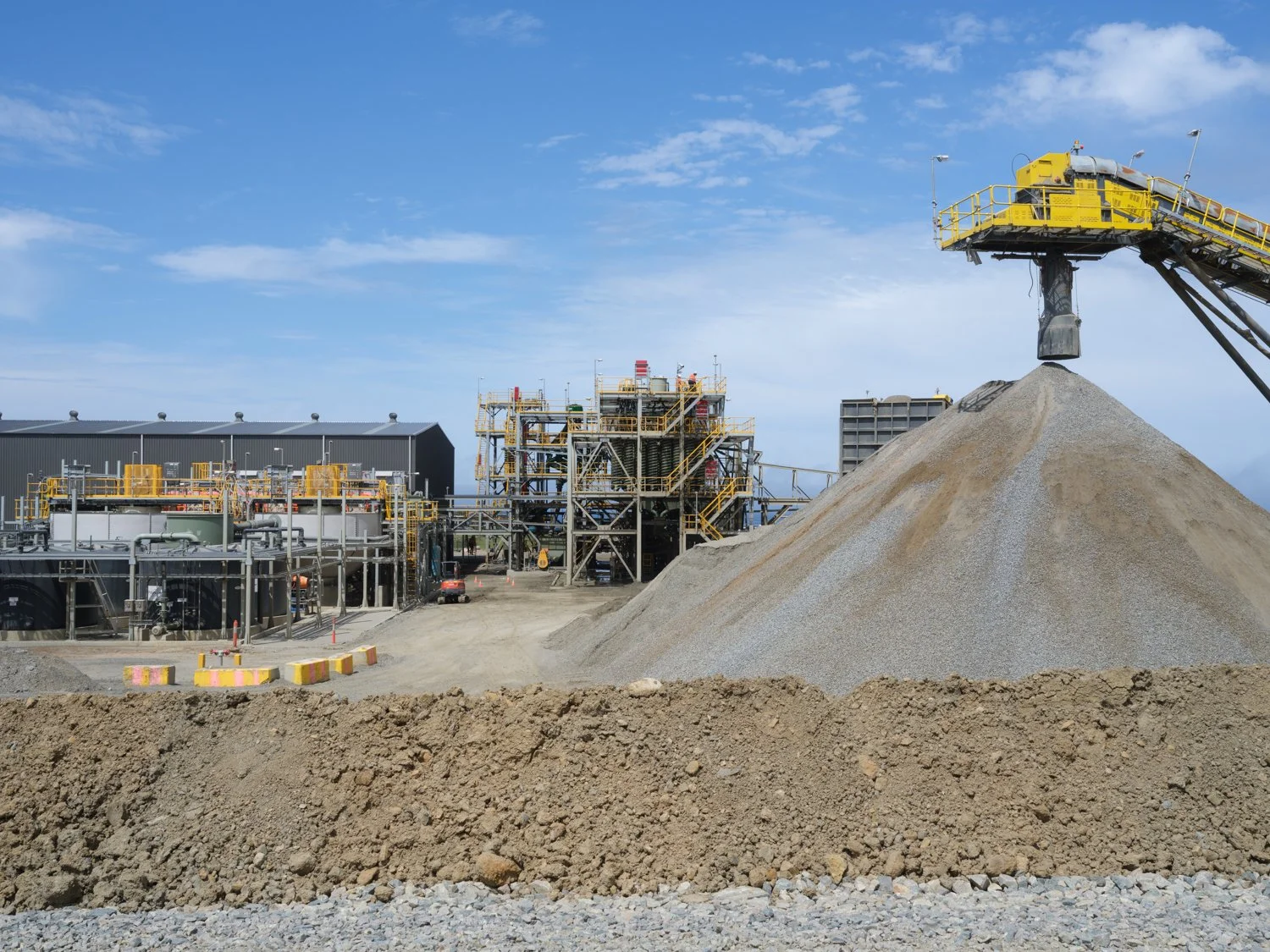

Tungsten
Tungsten was mined from King Island's interior for most of the twentieth century, the same metal that, drawn into filament, lit the darkroom and the enlarger. These photographs were made on expired Kodak Ektachrome 160T, a stock calibrated for that light and discontinued when the light went out of use: an obsolete film photographing the ground its own colour balance came from. Other works were made digitally, on a camera whose sensor is wired with tungsten drawn from ground like this. Tungsten is hard enough for armour-piercing cores and dense enough for missile ballast. China controls roughly four-fifths of world supply and has restricted exports since 2025; defence demand does not soften when the price rises. The mine's history is a record of that arithmetic. A mine is a way of knowing a place: it decides what the land is for, makes the resource visible, and renders everything else peripheral. The mine has opened and closed twice. It is open again.
The moving-image works were filmed from a car circling the mine — the surveying gaze, lateral and mobile, the way an operator reads a site. Cropped to the stockpiles, the camera tracks along heaps of ore whose heights rise and fall as they pass: a price chart drawn in the material itself. Further footage records the ore being milled to a fine powder for export. It is the same powder laid onto expired photographic paper in the camera-less works here